
News
Fuel costs, hedging in spotlight amid ongoing Middle East conflict
March 5th 2026
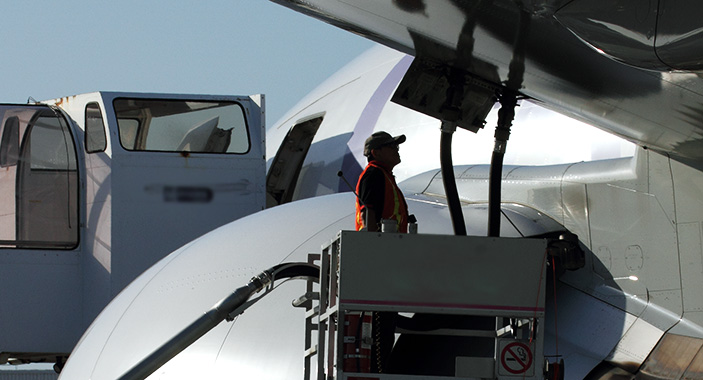
Higher oil prices due to the ongoing Iran war are raising jet fuel prices, which account for a large share of airlines’ costs. Read More » Some Asia-Pacific carriers are facing a double headwind from the strengthening dollar against local currencies in the region. The Korea Times predicts that South Korea’s major low-cost carriers (LCCs) will face structural deficits. Concerns are rising that the latest Middle East crisis will further erode LCCs’ profitability, following sharp earnings declines last year. “Unlike full-service carriers with diversified revenue streams, LCCs such as Jeju Air, Jin Air and T’way Air are particularly vulnerable to external uncertainties, as most of their operating costs in fuel, aircraft leasing and maintenance are denominated in dollars,” the newspaper said.
Some airlines in the region use futures and options to hedge against price increases. They also try to hedge against value changes in the U.S. dollar, in which jet fuel is priced. The report compiled by Reuters Agency show that the Asia-Pacific carriers took different approaches to hedging. Air New Zealand (Air NZ) said in February it was hedging 83% of fuel for the second half of its financial year and 46% for the first half of the year to 2027. It said the majority of its hedges were in Brent Crude, with some opportunistic Singapore Jet swaps expected in the second half of this year. Cathay Pacific said last year it was hedging fuel into the second quarter of 2027, covering around 30% of costs until the second quarter of 2026. China Eastern Airlines (CEA) said it made careful assessments based on the derivatives market conditions and did not carry out any jet fuel hedging transactions in the first half of 2025. As of 30 June 2025, it had no outstanding jet fuel hedging contracts. Qantas Airways reported in February it had 81% of its fuel hedged for the second half of its financial year ending June 30, 2026. Singapore Airlines (SIA) said in November it was hedging fuel for up to five years, with 49% of fuel covered in the quarter to December, 47% in the quarter to March reducing to 24% in the second half of the full-year to 2027 and 7% in the following years. It said it was paying between $66 and $69 per barrel of Brent hedged, and between $79 and $87 per barrel of MOPS. Virgin Australia said in February it was hedging 85% of fuel and 94% of foreign exchange for the second half of its financial year.

